

Can PG Thread Nylon Gland be used in explosive environments?
Dec 08, 2025
As a supplier of PG Thread Nylon Glands, I often receive inquiries from customers regarding their suitability for use in explosive environments. This is a crucial question, considering the high - risk nature of such environments and the need for reliable components. In this blog, I will delve into the technical aspects, safety considerations, and regulatory requirements to determine whether PG Thread Nylon Glands can indeed be used in explosive environments.
Understanding PG Thread Nylon Glands
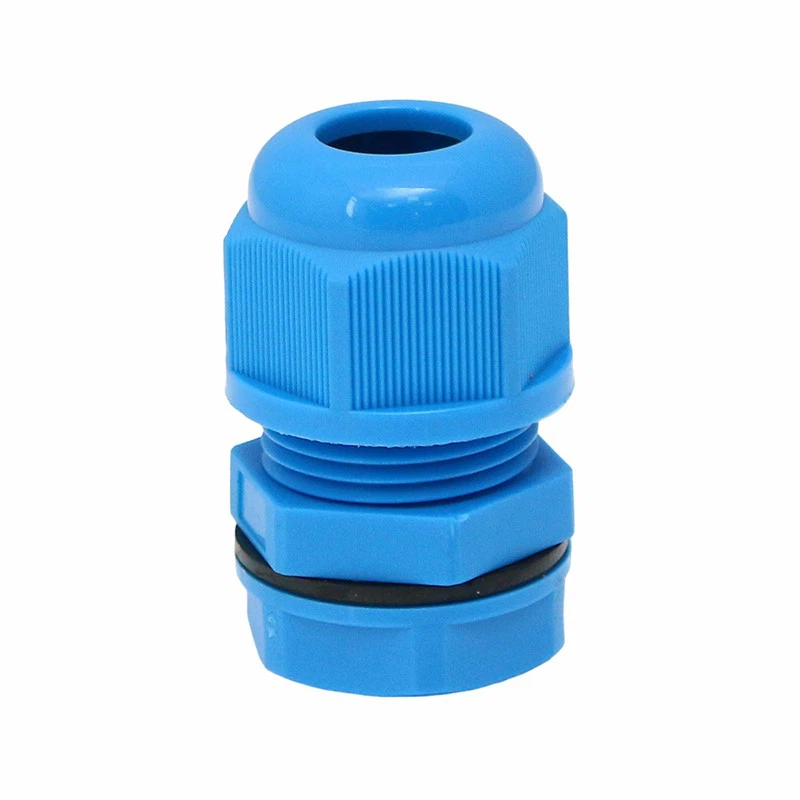
PG Thread Nylon Glands are a type of cable gland made primarily from nylon. They are designed to provide a secure and sealed entry point for cables into electrical enclosures, control panels, and other equipment. The "PG" refers to Panzergewinde, a standardized thread type widely used in European electrical installations. Nylon is chosen for its excellent mechanical properties, such as good tensile strength and low weight, as well as its chemical resistance and electrical insulation characteristics. For a range of PG Thread Nylon Glands, you can refer to PG Thread Nylon Gland.
Characteristics of Explosive Environments
Explosive environments are areas where flammable gases, vapors, mists, or dusts are present or may be present in sufficient quantities to cause an explosion. These environments are classified into different zones based on the frequency and duration of the presence of the explosive atmosphere. For example, Zone 0 is an area where an explosive gas - air mixture is present continuously or for long periods, while Zone 1 is an area where an explosive gas - air mixture is likely to occur occasionally during normal operation.
Technical Considerations for Using PG Thread Nylon Glands in Explosive Environments
Material Properties
One of the key factors to consider is the material's resistance to the chemicals and substances present in the explosive environment. Nylon is generally resistant to a wide range of chemicals, but certain aggressive chemicals may degrade the material over time. For example, strong acids or alkalis can attack the nylon, reducing its strength and integrity.
Another important aspect is the material's ability to dissipate electrostatic charges. In explosive environments, electrostatic discharges can act as an ignition source. Nylon is an insulating material, which means it can accumulate electrostatic charges. Special anti - static additives can be incorporated into the nylon during the manufacturing process to reduce the risk of electrostatic discharge.

Mechanical Integrity
The mechanical integrity of the PG Thread Nylon Gland is crucial in explosive environments. The gland must be able to withstand the mechanical stresses caused by cable movement, vibration, and temperature changes without losing its seal. A compromised seal can allow the ingress of explosive gases into the electrical enclosure, increasing the risk of explosion. Additionally, the threads of the gland must be able to provide a tight and secure connection to prevent any leakage.
Temperature Resistance
Explosive environments can experience a wide range of temperatures. The PG Thread Nylon Gland must be able to maintain its mechanical and sealing properties over this temperature range. Nylon has a relatively good temperature resistance, but extreme temperatures can affect its performance. For example, at high temperatures, nylon may become soft and lose its shape, while at low temperatures, it may become brittle and crack.
Safety and Regulatory Requirements
In most countries, the use of equipment in explosive environments is regulated by strict safety standards. These standards define the requirements for the design, testing, and certification of equipment to ensure its safety in explosive atmospheres. For example, in Europe, the ATEX directive (2014/34/EU) sets out the requirements for equipment and protective systems intended for use in potentially explosive atmospheres.
Any PG Thread Nylon Gland used in an explosive environment must meet the relevant safety standards. This typically involves undergoing rigorous testing to demonstrate its compliance with the standards. The gland may need to be tested for its ability to prevent the passage of explosive gases, its resistance to mechanical and thermal stresses, and its electrostatic properties.
Alternatives and Complementary Solutions
If the PG Thread Nylon Gland does not fully meet the requirements for use in a particular explosive environment, there are alternative solutions available. For example, NPT Thread Nylon Gland and Metric Thread Nylon Gland offer different thread types that may be more suitable for certain applications.
In some cases, it may also be necessary to use complementary solutions such as explosion - proof enclosures or cable seals in combination with the cable gland to enhance the overall safety of the installation.
Conclusion
The use of PG Thread Nylon Glands in explosive environments is a complex issue that requires careful consideration of technical, safety, and regulatory factors. While nylon has many desirable properties, such as its mechanical strength, chemical resistance, and electrical insulation, it also has limitations, particularly in terms of electrostatic charge generation and temperature resistance.
Before using a PG Thread Nylon Gland in an explosive environment, it is essential to assess the specific requirements of the application, including the type of explosive atmosphere, the temperature range, and the mechanical stresses involved. It is also crucial to ensure that the gland meets the relevant safety standards through proper testing and certification.
If you are considering using PG Thread Nylon Glands or need more information on their suitability for your explosive environment application, please feel free to contact us for a detailed discussion. Our team of experts is ready to assist you in finding the most appropriate solution for your needs.
References
- "ATEX Directive 2014/34/EU". European Union.
- International Electrotechnical Commission (IEC) standards related to equipment for explosive atmospheres.
- Technical literature on nylon materials and their properties.