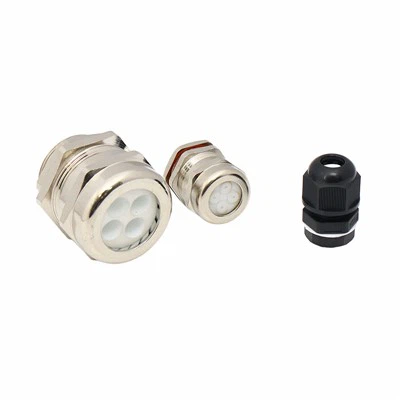
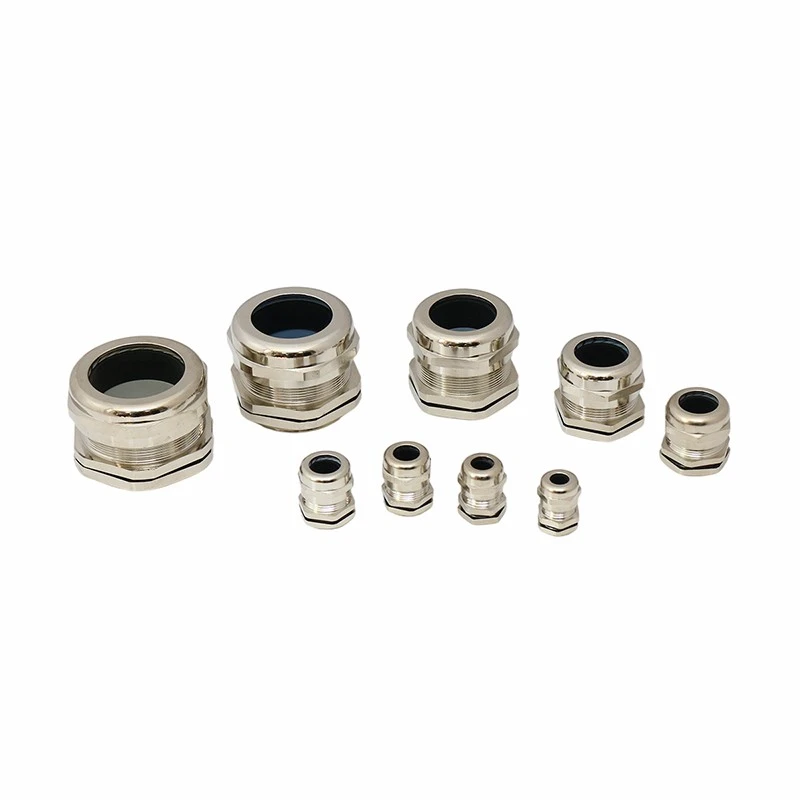
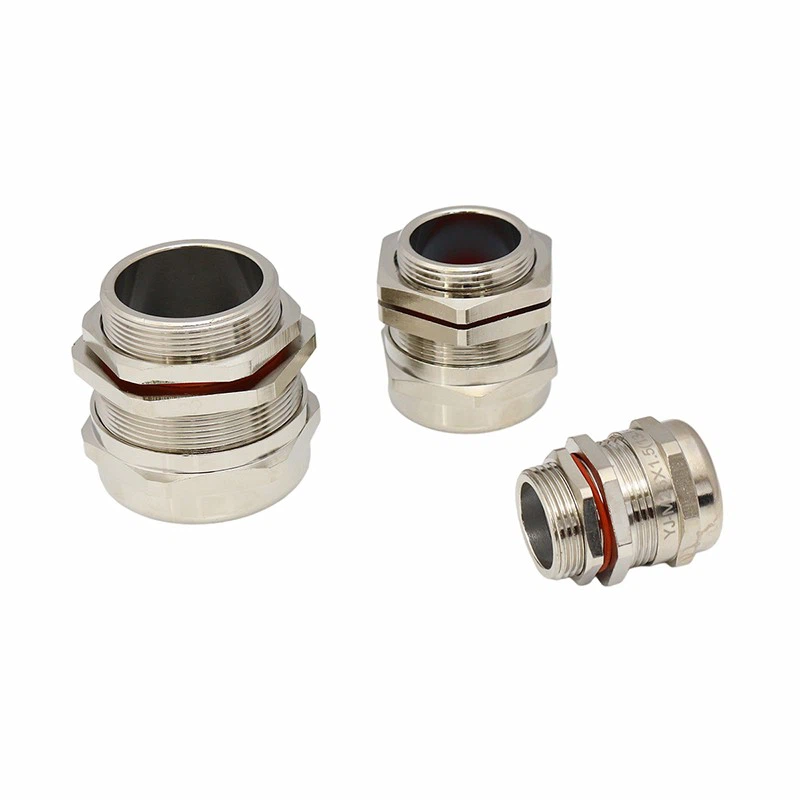
Metal Stuffing Gland

What Is Metal Stuffing Gland


Waterproof, dustproof and corrosion-resistant. The diameter of the clamping hose is large and the tensile strength is strong. Under the condition of reasonable use of products, the waterproof level can reach IP68. This product can be waterproof, dustproof, corrosion resistant, high hardness, and can work in damp, salt/acid / alkaline environments. Metal cable waterproof gland is the accessory of cable. The products are widely used in oil, chemical, machinery, nuclear power, shipbuilding, paper, pharmaceutical, food, aerospace and other fields. The gland can lock the cable, and the other end can be connected to the upper part of the equipment box, or screw thread can also be selected. Access to the import and export of the internal thread on the electric equipment. General mechanical control box, distribution plate, machine. The main function is to make the line unobstructed, to keep the cable sealed, and to ensure the insulation level of the cable gland to ensure its safe and reliable operation. If the sealing is bad, not only will the oil leakage cause the drying of the oil-impregnated paper, but also the moisture will intrude into the cable, causing the insulation performance of the paper to decrease.


Advantages of Metal Stuffing Gland

Environmental protection
By sealing on the outer cable sheath, excluding dust and moisture from the electrical or instrument enclosure.


Earth continuity
In the case of armoured cables, when the cable gland has a metallic construction. In this case cable glands May be tested to ensure that they can withstand an appropriate peak short circuit fault current.

Holding force

On the cable to ensure adequate levels of mechanical cable ‘pull out’ resistance.

Additional sealing

On the part of the cable entering the enclosure, when a high degree of ingress protection is required.

Additional environmental sealing

At the cable entry point, maintaining the ingress protection rating of the enclosure with the selection of applicable accessories dedicated to performing this function.

First 12 Last 1/2

Why Choose Us


Our factory
Fenghua Antaier Electric Co., Ltd. is a new company specializing in the production of cable waterproof joints, reducing rings, plugging parts, marine accessories and other products. The company was established in 2009 and has a vibrant management team to continuously optimize human resources Improve management strength.


Production applictaion
We have metal cable gland,plastic cable gland,explosion-proof grand head,cable stuffing box,cable entry, nylon products. Products are widely used in port machinery, machine tools, automation equipment, supporting oil fields, communication equipment, connectors, electric locomotives, solar photovoltaic electronics, shipbuilding and other major industries.


Our service
We try and respond to all concerns within 24 hours and our teams are always at your disposal in case of any emergencies.


EMC Gland PG Thread


Material Introduction of Metal Stuffing Gland

Metal cable glands made from stainless steel, aluminium, and brass offer a range of benefits: Stainless steel is a good choice for corrosion and pressure resistance. Aluminium is flexible, resistant to rust and also conducts heat and electricity well. Brass is a time-honoured choice offering strength and resistance to magnetism and deformation at both high and low temperatures. It also offers good electrical conductivity. It is widely used in the construction industry and industrial settings.


How Do Metal Stuffing Gland Work
 

Cable glands consist of multiple threaded parts which fit together to grip the cable and secure the gland assembly and cable to a piece of equipment or panel. The number of parts varies depending on the application and the required level of protection.


Firstly let's look at an example of a nylon ‘stuffing gland’. Perhaps the simplest type of gland, this comprises a body section, an outer sheath seal and a sealing nut. The complete assembly is secured to the equipment or panel via the threaded entry part; this can be threaded directly into the equipment if it has an existing receiving thread, or secured with a locknut if a blank hole. The cable can then be passed through the assembled gland and the sealing cap tightened, compressing the inner seal and securing the cable in place. This also provides an environmental seal around the outer sheath.


Our second example is a brass cw type steel wire armour gland. This gland is slightly more complex, because it needs to provide an additional connection to the cable armour, however it shares the same fundamental design. The entry thread of the body is used to secure the whole assembly to the equipment. A secondary threaded nut which houses a cone-and-ring assembly secures the cable armour to the gland and finally once again a sealing nut secures and provides an environmental seal against the outer sheath.


There are several variations on this theme but nearly all cable glands work along this fundamental principal of a threaded entry assembly that connects to the equipment and additional threaded nuts which secure the cable to the assembly. These May provide additional seals on both the inner and outer sheath, allow for connection to braided cables, special emc connections or increased safety for hazardous areas.


The Role of Metal Stuffing Gland

Outdoor cable protection
Safeguarding electrical cables laid outdoors, providing crucial environmental protection against rain and adverse weather conditions.


Offshore applications
Protecting electrical equipment and cables in offshore settings, where regular exposure to water is anticipated.


Passing cabling through barriers
Facilitating the passage of cabling through plating and bulkheads, ensuring secure and protected cable entry.
If your application is exposed to any of these risks or necessitates specific requirements, careful consideration of various cable gland types is crucial to ensure optimal security and protection. For instance, the need for waterproof cable glands arises to counter water ingress, while the choice of metal cable glands crafted from materials like brass, aluminum, or steel ensures robust performance. Additionally, a range of plastic and rubber protection systems is available. The selection of the appropriate cable gland hinges on the unique environmental conditions in which your business functions.

Hazardous environments

Deployed in extreme industrial conditions with a risk of explosive or hazardous environments.

Dusty industrial settings

Applied in industrial environments generating substantial dust, ensuring electrical equipment remains shielded.

Chemical exposure protection

Shielding unprotected or unarmoured cables from exposure to dangerous or corrosive chemicals.


How to Install a Metal Stuffing Gland


Cable glands vary but the fundamentals of installation are as follows. Follow the manufacturer’s guidelines and ensure you comply with local codes of practice. Switch off all electrical equipment and disconnect any live wires. Be careful not to damage loose entry wires during installation. Ensure your gland is fully compatible with the cables you plan to attach it to. Make sure your cable glands are not exposed to solvents, chemical substances, or dirt during the installation process.


Begin by opening the cable gland and detaching the nut. Use a suitable tool to peel back the outer sheath of the cabling to a length that matches the size of the gland. Expose the inner metal armour if that is present. Insert the right end of the gland into the cable and lay the peeled sheath or armour evenly around the gland. Reapply the nut and carefully tighten this using a spanner or similar tool in order to secure the gland in place. Some cable glands have two halves and are designed to fit on either side of an enclosure, providing a watertight seal for a cable. Installation of these glands requires drilling a hole in the wall of the enclosure then securing each half of the gland into place.


To fit a gland to an armoured or cable, you will need a pair of quality wire cutters or a hacksaw, along with two suitably sized spanners.


Begin by unscrewing the cable gland and sliding the various parts onto the cable in the correct order. Strip a length of the outer insulation as well as the inner and armouring layers and peel these back. The combination and lengths of the peeled pieces depend on the type of cable and gland you are using. Fit the cone of the cable gland beneath the inner insulation and armouring. This may require some splaying of the core wires. Make sure these lay over the cone and do not enter it as this can cause damage to the inner insulation. Slide up the armour gripping ring. Screw the armour locking nut back to the cone, thereby forcing the armour gripping ring up the cone and trapping the wires in place. Use your spanners to tighten each gland part. Seal the back of the gland by applying the sealing nut. These compress the internal sealing against the outer insulation, making the gland watertight.


When Are Metal Stuffing Gland Needed


The benefits of cable glands are well established within the industries in which they are most commonly used, particularly those in which electrical cables and equipment are most likely to be exposed to the elements. This includes the aerospace, manufacturing, marine, power & utilities, telecommunications, transportation and food & beverage sectors, among many others, all of which regularly utilise both normal cable glands and armoured cable glands to help protect their critical electrical system infrastructure from moisture, dirt, dust and other contaminants.


If you are considering whether a cable gland is the right solution to protect your electrical connection, consider the following questions: Is your electrical equipment located indoors or outdoors? Is it likely that a cable entry point could be exposed to rain, nearby water or other ambient sources of contamination? Does your setup require an electrical cable or electrical power system to operate reliably in an explosive or hazardous environment, meaning that additional environmental sealing will be required? Would your electrical instrumentation potentially be vulnerable to dust or damp without a separate sealing and termination device to offer protection?


What is the temperature at the operating site? Is this temperature consistent, or could your electrical equipment potentially be damaged by excessive heat or cold? Are you operating automation systems that need to run for extended periods without manual maintenance or cleaning? If the answer to any of these questions is yes, then your application may benefit from the use of a sturdy cable gland to help provide the protection and reliability that your business needs. By finding the right cable glands that offer an appropriate ingress protection rating and build quality, you will be able to ensure that your electrical systems continue to operate at optimal efficiency at all times.


Understand Essential Metal Stuffing Gland Selection Criteria and Options

Cable glands are indispensable for protecting wire and cable terminations against unwanted disconnections or damage in machines and control cabinets. Because different cable glands accommodate different cables, materials or application needs, choosing the right one can be difficult. This blog will cover various cable glands and their benefits so you may choose the best one for your application. As you begin, be sure to identify the following factors during the selection process:

EMC Gland Metric Thread
Multi Hole Gland Metric Thread
NPT Thread Gland

The type of cable being used
Each cable type presents a different requirement. For instance, flex cables can prove versatile where constant, repeated motion occurs, and certain cable glands can help protect them from inherent conductor fatigue. Another example — VFD and shielded cables — Need cable glands that create a ground path to earth ground for EMC protection. And several smaller cables sharing a common termination point require a cable gland with multiple holes.


Cable diameter
The cable diameter will determine the gland’s hole diameter for proper cable feedthrough.


The application’s environment
Certain cable glands protect against specific threats such as dust, vapors and liquid exposure or submersion, extreme temperatures, vibrations, impacts and explosion.


Material requirements
Material selection factors into how well your termination stands up to its environment and how well your gland works with your cable’s material.


Approvals
Some extreme environments — Especially those where human safety is critical — Require approvals from a specific standards organization as well as local approval. Cable glands may require UL 94V-2 flammability rating, IP 68 ingress protection against dust and immersion, or approvals indicating explosion protection.


Our factory

Fenghua Antaier Electric Co., Ltd. is a new company specializing in the production of cable waterproof joints, reducing rings, plugging parts, marine accessories and other products. The company was established in 2009 and has a vibrant management team to continuously optimize human resources Improve management strength. By investing in various testing tools, improving product quality, and developing new products, Antaier people are working towards the goal of "not seeking the largest, but seeking the most professional". Metal Cable Gland,Plastic Cable Gland,Explosion-proof Grand Head,Cable Stuffing Box,Cable Entry, Nylon Products. Products are widely used in port machinery, machine tools, automation equipment, supporting oil fields, communication equipment, connectors, electric locomotives, solar photovoltaic electronics, shipbuilding and other major industries.

productcate-1-1


certificates
 
productcate-1-1
productcate-1-1
productcate-1-1
productcate-1-1


FAQ
 

Q: What is a metal sealing gland?

A: A metal sealing gland is a device used to compress and seal a packing material around a rotating or reciprocating shaft, preventing fluid leakage.

Q: What materials are used in metal sealing glands?

A: Common materials include stainless steel, brass, and other metals that resist corrosion and wear.

Q: What are the applications of metal sealing glands?

A: They are used in pumps, valves, and other equipment where fluid sealing is critical.

Q: How do metal sealing glands work?

A: They work by applying pressure to a packing material, which conforms to the shaft and creates a seal.

Q: What are the advantages of metal sealing glands?

A: They offer durability, high-pressure resistance, and the ability to handle a wide range of temperatures and fluids.

Q: How do you install a metal sealing gland?

A: Installation typically involves assembling the gland components, installing the packing material, and adjusting the gland to achieve the desired sealing pressure.

Q: How do you maintain a metal sealing gland?

A: Regular inspection and replacement of worn packing material, as well as ensuring proper gland adjustment, are key to maintaining performance.

Q: What is the difference between metal sealing glands and other types of seals?

A: Metal sealing glands rely on compression of a packing material to create a seal, while other types of seals may use elastomeric materials, mechanical devices, or other methods.

Q: Can metal sealing glands be used in high-temperature applications?

A: Yes, many metal sealing glands are designed to handle high temperatures.

Q: Can metal sealing glands be used in corrosive environments?

A: Yes, they are often made of corrosion-resistant materials.

Q: What is the lifespan of a metal sealing gland?

A: Lifespan depends on factors such as material, application, and maintenance.

Q: How do you choose the right metal sealing gland for your application?

A: Consider factors such as fluid type, pressure, temperature, shaft size, and required sealing performance.

Q: How do you troubleshoot metal sealing gland issues?

A: Inspect for wear, adjust the gland, and replace worn packing material as needed.

Q: Can metal sealing glands be used in vacuum applications?

A: Some designs can, but it depends on the specific application and gland design.

Q: What are the safety considerations for using metal sealing glands?

A: Ensure proper installation, maintenance, and compliance with safety standards.

Q: How do metal sealing glands compare in cost to other sealing methods?

A: Costs can vary widely depending on application and material.

Q: What are some alternative sealing methods to metal sealing glands?

A: Elastomeric seals, mechanical seals, and magnetic seals are alternatives.

Q: Can metal sealing glands be customized for specific applications?

A: Yes, many manufacturers offer custom designs to meet specific needs.

Q: What are the environmental impacts of metal sealing glands?

A: They can have environmental impacts if not properly maintained or disposed of, but many designs are designed to minimize fluid leakage.

Q: What are the latest trends in metal sealing gland technology?

A: Trends include improved materials, designs for higher efficiency and durability, and integration with other technologies such as sensors for real-time monitoring.

As one of the most professional metal stuffing gland suppliers in China, we're featured by quality products and good service. Please rest assured to buy customized metal stuffing gland from our factory. Contact us for more details.

Brass Enlager PG Thread, EMC Gland PG Thread, EMC Gland Metric Thread

(0/10)

clearall