

What is the function of a plastic stuffing gland?
Dec 16, 2025
A plastic stuffing gland, also known as a cable gland, is a crucial component in many electrical and mechanical systems. As a leading supplier of plastic stuffing glands, I have witnessed firsthand the diverse functions and applications of these essential devices. In this blog post, I will delve into the primary functions of plastic stuffing glands and explore how they contribute to the safety and efficiency of various installations.
1. Cable Securement
One of the fundamental functions of a plastic stuffing gland is to secure cables in place. When cables are installed in electrical panels, machinery, or other equipment, they need to be firmly held to prevent movement. Movement of cables can lead to a variety of issues, such as abrasion, which can damage the cable insulation over time. This damage may expose the conductors, creating a risk of electrical short - circuits or even electrical fires.
Plastic stuffing glands use a clamping mechanism to grip the cable tightly. The gland is typically designed with a nut or a compression ring that, when tightened, squeezes the inner part of the gland around the cable. This ensures that the cable remains stationary, regardless of external vibrations, shocks, or other forces that the installation may be subjected to. For example, in industrial machinery that operates with high - speed moving parts, the vibrations can cause cables to shift if not properly secured. A well - installed plastic stuffing gland prevents this movement, thus protecting the integrity of the cable and the overall system.

2. Environmental Sealing
Another vital function of plastic stuffing glands is to provide environmental sealing. In many applications, cables are exposed to various environmental conditions, such as dust, moisture, and chemicals. If these elements penetrate the cable entry point, they can cause significant damage to the cables and the connected equipment.
Plastic stuffing glands are designed to create a barrier against these environmental factors. They are often made from materials that are resistant to water, dust, and chemicals. For instance, in outdoor electrical installations, such as streetlights or solar power systems, the plastic stuffing gland prevents rainwater from entering the cable entry point. This is crucial because water can cause corrosion of the cable conductors and damage the insulation, leading to electrical failures.
In industrial settings where chemicals are present, the gland's chemical - resistant properties protect the cables from chemical attack. For example, in a chemical processing plant, the plastic stuffing gland ensures that corrosive chemicals do not seep into the cable, which could otherwise lead to equipment breakdown and costly repairs.
3. Electrical Insulation
Plastic stuffing glands also play a role in electrical insulation. Since they are made of non - conductive plastic materials, they help to isolate the cables from the surrounding environment. This is important for preventing electrical leakage and short - circuits.
When a cable is inserted through a metal enclosure, there is a risk of electrical contact between the cable and the metal surface if there is no proper insulation. The plastic stuffing gland acts as an insulating layer between the cable and the enclosure. This reduces the risk of electrical shock to personnel working on or near the equipment and also protects the electrical system from short - circuits that could be caused by accidental contact between the cable and the metal.
4. Strain Relief
Strain relief is an important function of plastic stuffing glands. Cables can be subjected to mechanical stress, such as pulling or bending, during installation or normal use. If this stress is not properly managed, it can cause damage to the cable conductors and insulation.
Plastic stuffing glands are designed to distribute the mechanical stress along the length of the cable. When a cable is pulled or bent, the gland absorbs and disperses the force, preventing it from concentrating on a single point of the cable. This is particularly important in applications where cables are frequently moved or adjusted, such as in robotic arms or flexible electrical installations. By providing strain relief, the plastic stuffing gland extends the lifespan of the cable and reduces the likelihood of cable failures.
5. Different Types of Plastic Stuffing Glands and Their Specialized Functions
There are various types of plastic stuffing glands available in the market, each with its own specialized functions. For example, the Nylon Metric Thread Dome Plug is designed to provide a secure and sealed closure for unused cable entries. It is often used in electrical panels or enclosures where there are extra holes that need to be covered to prevent the entry of dust and moisture.
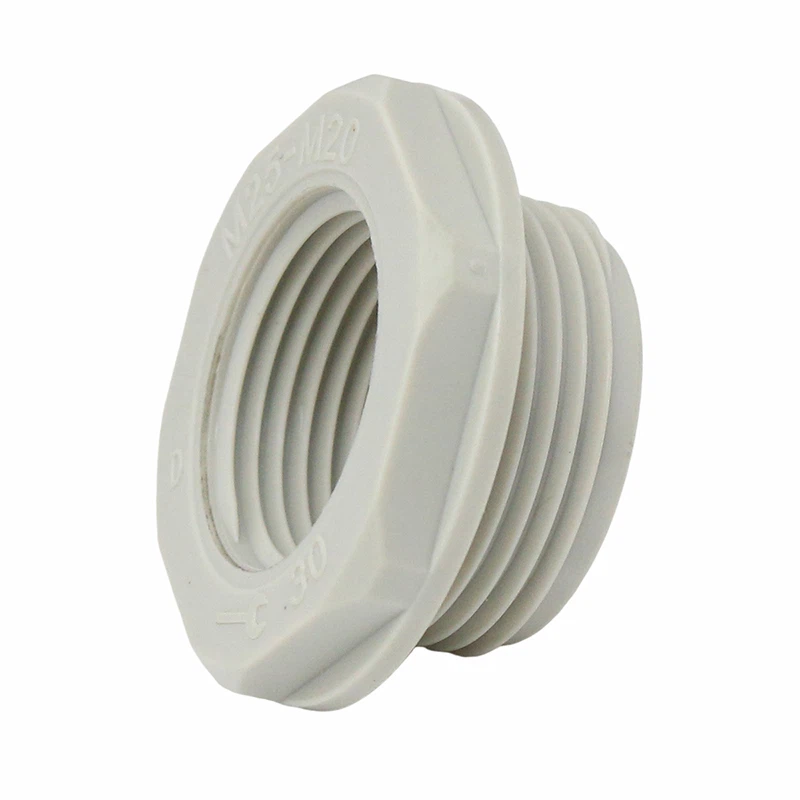
The Nylon Metric Thread Reducer is used to adapt cables of different sizes to a single gland. This is useful when multiple cables of varying diameters need to be installed in the same enclosure. The reducer allows for a proper fit and ensures that the sealing and securing functions of the gland are maintained.
The Nylon PG Thread Reducer is specifically designed for use with PG - threaded enclosures. It provides a seamless connection between the cable and the enclosure, ensuring that the cable is properly secured and sealed. This type of reducer is commonly used in European electrical installations where the PG thread standard is widely adopted.
Conclusion
In conclusion, plastic stuffing glands are essential components in electrical and mechanical systems. Their functions of cable securement, environmental sealing, electrical insulation, and strain relief are crucial for the safety and efficiency of various installations. As a supplier of plastic stuffing glands, I understand the importance of providing high - quality products that meet the diverse needs of our customers.
Whether you are working on an industrial project, an outdoor installation, or a commercial application, choosing the right plastic stuffing gland is vital. Our company offers a wide range of plastic stuffing glands, including the specialized types mentioned above, to ensure that you can find the perfect solution for your specific requirements.
If you are interested in purchasing plastic stuffing glands or have any questions about our products, please feel free to contact us. Our team of experts is ready to assist you in selecting the most suitable gland for your application and guide you through the installation process. We look forward to working with you to ensure the success of your projects.
References
- "Electrical Installation Handbook", Schneider Electric
- "Industrial Cable Management", Siemens AG
- "Cable Gland Selection Guide", Panduit Corporation