

What is the production process of Nylon PG Thread Reducers?
Jun 30, 2025
Hey there! I'm a supplier of Nylon PG Thread Reducers, and today I'm gonna walk you through the production process of these nifty little components. Nylon PG Thread Reducers are widely used in various industries for cable management and protection, and understanding how they're made can give you a better appreciation of their quality and functionality.
1. Raw Material Selection
The first step in the production of Nylon PG Thread Reducers is choosing the right raw materials. We use high - quality nylon, which is known for its excellent mechanical properties, such as high strength, good abrasion resistance, and chemical stability. Nylon also has a relatively low coefficient of friction, which makes it easy to install and helps prevent damage to cables.
We source our nylon from reliable suppliers who meet our strict quality standards. The raw nylon usually comes in the form of pellets, which are then stored in a dry environment to prevent moisture absorption. Moisture can affect the quality of the final product, so keeping the pellets dry is crucial.
2. Pre - processing of Raw Materials
Before the actual manufacturing process, the nylon pellets need to be pre - processed. This involves drying the pellets to remove any remaining moisture. We use specialized drying equipment to heat the pellets at a controlled temperature for a specific period. This step ensures that the nylon has the right consistency for the next stage.
Once the pellets are dry, they are sometimes mixed with additives. These additives can enhance certain properties of the nylon, such as UV resistance, flame retardancy, or color. For example, if the Nylon PG Thread Reducers are going to be used outdoors, we might add UV stabilizers to prevent the nylon from degrading due to sunlight exposure.
3. Injection Molding
Injection molding is the heart of the production process for Nylon PG Thread Reducers. We use injection molding machines, which are highly precise and efficient.
First, the pre - processed nylon pellets are fed into the hopper of the injection molding machine. The machine then heats the pellets until they melt into a liquid state. The molten nylon is then injected under high pressure into a custom - made mold.
The mold is designed to have the exact shape and dimensions of the Nylon PG Thread Reducer. It consists of two halves that fit together perfectly. When the molten nylon is injected into the mold, it fills all the cavities and takes on the shape of the reducer.
The mold is cooled rapidly to solidify the nylon. Cooling time is carefully controlled to ensure that the Nylon PG Thread Reducer has a uniform structure and good mechanical properties. Once the nylon has solidified, the mold opens, and the newly formed Nylon PG Thread Reducer is ejected.
4. Post - molding Processing
After the injection molding, the Nylon PG Thread Reducers go through a series of post - molding processes.
Trimming
The first post - molding step is trimming. During the injection molding process, some excess nylon may form around the edges of the reducer. This excess material, known as flash, needs to be removed. We use precision cutting tools to trim the flash carefully, ensuring that the final product has a clean and smooth appearance.
Threading
One of the most important features of a Nylon PG Thread Reducer is its thread. After trimming, the reducers are sent to a threading machine. The threading machine cuts the precise PG threads on the reducer. These threads need to be accurate to ensure a proper fit with other components, such as cables or connectors.
Quality Inspection
Quality inspection is a critical part of the post - molding process. We have a team of quality control experts who check each Nylon PG Thread Reducer thoroughly. They look for any defects, such as cracks, voids, or incorrect thread dimensions. We use a variety of inspection tools, including calipers, micrometers, and visual inspection. Only the reducers that meet our strict quality standards are allowed to move on to the next stage.
5. Surface Treatment and Finishing
Once the Nylon PG Thread Reducers have passed the quality inspection, they may undergo surface treatment and finishing.
Cleaning
The reducers are first cleaned to remove any dust, debris, or mold release agents that may be on the surface. We use mild cleaning agents and ultrasonic cleaning equipment to ensure a thorough cleaning.
Coating (Optional)
In some cases, we may apply a coating to the Nylon PG Thread Reducers. This coating can provide additional protection, such as anti - static properties or a smooth finish. For example, an anti - static coating can prevent the accumulation of dust on the reducers, which is especially important in cleanroom environments.
6. Packaging
After all the manufacturing and finishing steps, the Nylon PG Thread Reducers are ready for packaging. We use high - quality packaging materials to protect the reducers during transportation and storage.
The reducers are usually placed in plastic bags or boxes, and then labeled with important information, such as the product model, size, and quantity. We also include a product manual or specification sheet in the package to provide customers with all the necessary information.
Why Choose Our Nylon PG Thread Reducers?
We take pride in our production process, which is why our Nylon PG Thread Reducer are of the highest quality. Our strict quality control measures ensure that every reducer we produce meets or exceeds industry standards.
In addition to Nylon PG Thread Reducers, we also offer Nylon Metric Thread Reducer and Nylon Metric Thread Dome Plug. These products are also manufactured with the same level of care and precision.

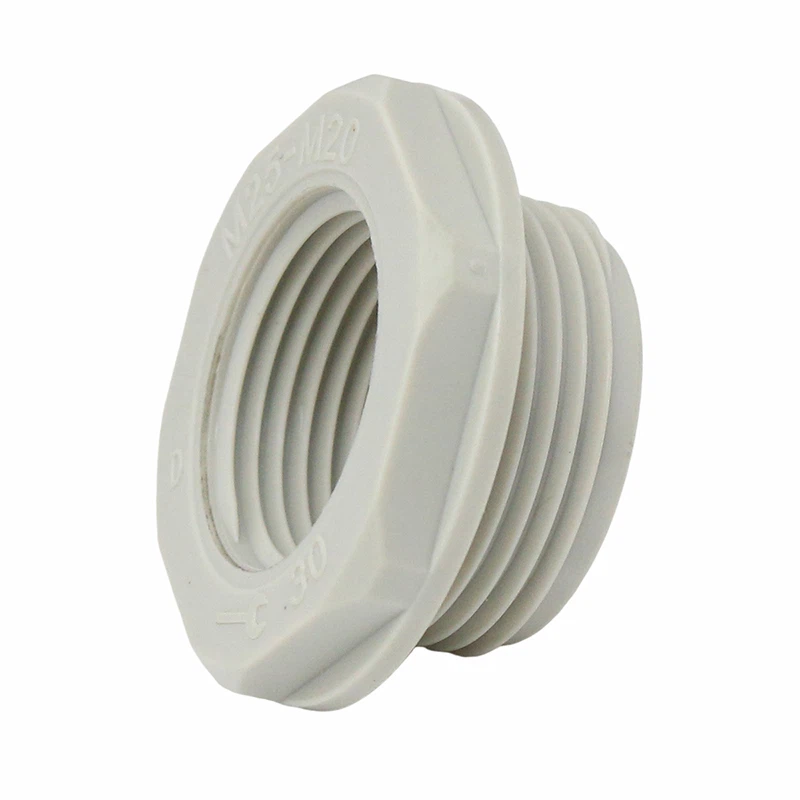
If you're in the market for Nylon PG Thread Reducers or any of our other products, we'd love to hear from you. Whether you're a small - scale business or a large industrial company, we can provide you with the right solutions for your cable management needs. Don't hesitate to reach out and start a conversation about your procurement requirements.
References
- "Plastics Engineering Handbook". This book provides in - depth knowledge about plastic materials and their processing techniques, which was very helpful in understanding the properties of nylon and the injection molding process.
- Industry standards and guidelines for cable management components. These standards ensure that our products meet the necessary quality and safety requirements.