

What is the resistance to high - frequency interference of explosion proof cable?
Jul 17, 2025
What is the resistance to high - frequency interference of explosion proof cable?
As a supplier of Explosion Proof Cable, I've encountered numerous inquiries about the high - frequency interference resistance of our cables. This is a crucial aspect, especially in industries where explosion - proof cables are used, such as oil and gas, chemical plants, and mining.
High - frequency interference can stem from various sources. In industrial settings, equipment like radio transmitters, switch - mode power supplies, and high - speed digital circuits can generate high - frequency electromagnetic fields. These fields can couple with the explosion - proof cables, leading to signal distortion, noise in communication systems, and even malfunctions in sensitive electronic devices connected to the cables.
The resistance of explosion - proof cables to high - frequency interference is determined by several key factors. One of the primary factors is the shielding design of the cable. A well - designed shield can effectively block the penetration of high - frequency electromagnetic waves. Most explosion - proof cables are equipped with a metallic shield, usually made of copper or aluminum. The shield acts as a Faraday cage, redirecting the electromagnetic energy around the cable core and preventing it from interfering with the signal transmission inside the cable.
The type of shielding also plays a vital role. There are two common types of shielding: braided shielding and foil shielding. Braided shielding consists of a mesh of fine metal wires woven around the cable core. It provides good flexibility and mechanical protection. The braid's tightness affects its high - frequency performance. A tighter braid offers better shielding effectiveness at high frequencies because it has a lower impedance, which allows it to more effectively divert the electromagnetic interference.
On the other hand, foil shielding is a thin layer of metal foil wrapped around the cable core. It is highly effective at blocking high - frequency electromagnetic fields, especially those with wavelengths shorter than the mesh size of a braided shield. Foil shielding is often used in combination with braided shielding to provide a more comprehensive shielding solution. The foil can block high - frequency components, while the braid offers mechanical protection and low - frequency shielding.
Another important factor is the cable's insulation material. High - quality insulation materials not only provide electrical insulation but also contribute to the cable's resistance to high - frequency interference. Some insulation materials have dielectric properties that can reduce the coupling of electromagnetic fields into the cable core. For example, materials with low dielectric constants can help to minimize the capacitance between the cable conductors and the external environment, which in turn reduces the susceptibility to high - frequency interference.
The construction of the cable also impacts its high - frequency performance. A well - constructed cable with proper conductor spacing and twisting can reduce the electromagnetic coupling between conductors. Twisted pair cables, for instance, are commonly used in explosion - proof applications. The twisting of the conductors helps to cancel out the electromagnetic interference induced in each conductor. When an external electromagnetic field affects the cable, the induced voltages in the two conductors of a twisted pair are equal in magnitude but opposite in phase. As a result, these voltages cancel each other out at the receiving end, reducing the overall interference.
In addition to the internal design of the cable, the installation and grounding of the explosion - proof cable are crucial for its high - frequency interference resistance. Proper grounding of the cable shield ensures that the diverted electromagnetic energy is safely discharged to the ground. If the grounding is not done correctly, the shield may not function effectively, and the cable may still be susceptible to high - frequency interference.
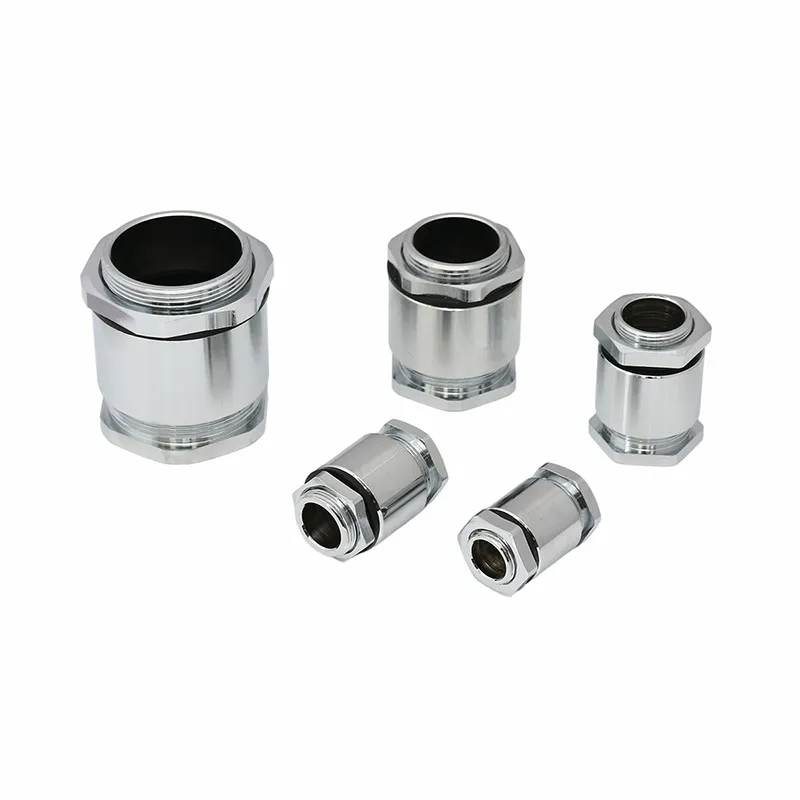
When installing explosion - proof cables, it is also important to use appropriate cable glands, such as the TJ - Clamping Marine Cable Gland. These glands not only provide a secure mechanical connection but also help to maintain the integrity of the cable's shielding. A good cable gland can prevent the ingress of moisture and dust, which can degrade the cable's performance over time. It also ensures that the shield is properly grounded and that there are no gaps or discontinuities in the shielding path.

To test the high - frequency interference resistance of explosion - proof cables, various methods are employed. One common method is the use of electromagnetic compatibility (EMC) testing. In EMC testing, the cable is exposed to a controlled high - frequency electromagnetic environment, and the level of interference induced in the cable is measured. The results of these tests are used to determine the cable's shielding effectiveness and its compliance with relevant industry standards.
Industry standards, such as those set by the International Electrotechnical Commission (IEC) and the National Electrical Manufacturers Association (NEMA), provide guidelines for the high - frequency performance of explosion - proof cables. These standards specify the minimum shielding effectiveness required at different frequencies and under various test conditions. By adhering to these standards, we can ensure that our explosion - proof cables offer reliable resistance to high - frequency interference in real - world applications.
In conclusion, the resistance of explosion - proof cables to high - frequency interference is a complex but essential characteristic. It is determined by the cable's shielding design, insulation material, construction, installation, and grounding. As a supplier, we are committed to providing high - quality explosion - proof cables that meet the strictest industry standards for high - frequency performance.
If you are in need of explosion - proof cables with excellent high - frequency interference resistance, we invite you to contact us for a detailed discussion. Our team of experts can help you select the most suitable cable for your specific application and provide you with all the necessary technical support. Whether you are working on a new project or looking to upgrade your existing cable infrastructure, we are here to assist you. Let's work together to ensure the reliability and safety of your electrical systems in high - risk environments.
References
- International Electrotechnical Commission (IEC) standards related to explosion - proof electrical equipment and electromagnetic compatibility.
- National Electrical Manufacturers Association (NEMA) publications on cable performance and safety.
- Technical literature on cable shielding and electromagnetic interference from leading cable manufacturers.