

What is the sound - insulation performance of explosion proof cable?
Oct 22, 2025
As a supplier of Explosion Proof Cable, I often encounter inquiries about various aspects of our products. One question that has come up more frequently lately is about the sound - insulation performance of explosion proof cable. In this blog, I'll delve into this topic, providing in - depth information based on scientific knowledge and practical experience.
Understanding Explosion Proof Cable
First, let's briefly understand what explosion proof cable is. Explosion proof cables are designed to prevent the spread of explosions and fires in hazardous environments. These environments could be chemical plants, oil refineries, mines, or any place where flammable gases, vapors, or dusts are present. The cables are constructed with special materials and designs to ensure that even if there is an internal short - circuit or other electrical fault, it won't ignite the surrounding explosive atmosphere. You can find more details about our Explosion Proof Cable on our website.
Sound - Insulation Mechanisms in General
Sound insulation refers to the ability of a material or structure to reduce the transmission of sound from one side to the other. There are several mechanisms through which sound insulation can occur:
- Absorption: Materials can absorb sound energy and convert it into heat. For example, porous materials like fiberglass or acoustic foams have many small air pockets. When sound waves enter these pockets, they cause the air molecules to vibrate, and this vibration is dissipated as heat.
- Reflection: Some materials can reflect sound waves. Hard and dense materials such as metal or concrete are good at reflecting sound. When a sound wave hits a reflective surface, it bounces back instead of passing through.
- Damping: Damping is the process of reducing the amplitude of sound waves by converting their energy into other forms. Materials with high damping properties can effectively reduce the vibration and thus the sound transmission.
Sound - Insulation Performance of Explosion Proof Cable
The sound - insulation performance of explosion proof cable is influenced by multiple factors related to its construction and materials.
- Cable Jacket Material: The outer jacket of explosion proof cables is often made of materials like rubber or thermoplastics. These materials can contribute to sound insulation to some extent. Rubber, for instance, has some damping properties. It can absorb a portion of the sound energy that tries to pass through the cable. When sound waves hit the rubber jacket, the rubber molecules vibrate, and the energy of the sound wave is gradually dissipated as heat within the rubber.
- Conductor Insulation: The insulation around the conductors also plays a role. High - quality insulation materials can act as a barrier to sound transmission. For example, some insulation materials are designed to be dense and have good sound - blocking capabilities. They can prevent sound from traveling along the length of the cable by reflecting and absorbing the sound waves.
- Armoring: Many explosion proof cables are armored with metal or other strong materials. The armor provides an additional layer of protection against mechanical damage, but it also has an impact on sound insulation. Metal armor, being a dense and reflective material, can reflect a significant amount of sound. If there is a sound source near the cable, the metal armor will bounce back a large portion of the sound waves, reducing the amount of sound that can penetrate the cable.
Testing and Evaluation of Sound - Insulation Performance
To accurately assess the sound - insulation performance of explosion proof cable, various testing methods are used.
- Sound Transmission Loss (STL) Testing: This is a common method to measure how much sound is reduced when passing through a material or structure. In the case of explosion proof cable, a test setup is used where a sound source is placed on one side of the cable, and a microphone is placed on the other side to measure the sound level. The difference in sound level between the source side and the receiving side is the sound transmission loss. A higher STL value indicates better sound - insulation performance.
- Impact on Sound in Real - World Applications: In real - world scenarios, the sound - insulation performance of explosion proof cable can have practical implications. For example, in a noisy industrial environment, the cable can act as a sound barrier. If there are loud machinery or equipment near the cable, the cable can prevent some of the noise from spreading to other areas.
Comparing with Other Cable Types
When comparing explosion proof cables with other types of cables in terms of sound - insulation performance, several factors come into play.
- Standard Power Cables: Standard power cables usually have a simpler construction and may not have the same level of sound - insulation features as explosion proof cables. The lack of specialized jackets, insulation, and armoring in standard cables means that they are generally less effective at blocking sound.
- Acoustic Cables: Acoustic cables are specifically designed for audio applications and are optimized for sound - related performance. While explosion proof cables are not primarily designed for acoustic purposes, in some cases, they can still provide a certain level of sound insulation. However, acoustic cables may have better absorption and damping properties, especially if they are made with high - end acoustic materials.
Applications Where Sound - Insulation Matters
There are specific applications where the sound - insulation performance of explosion proof cable can be beneficial.

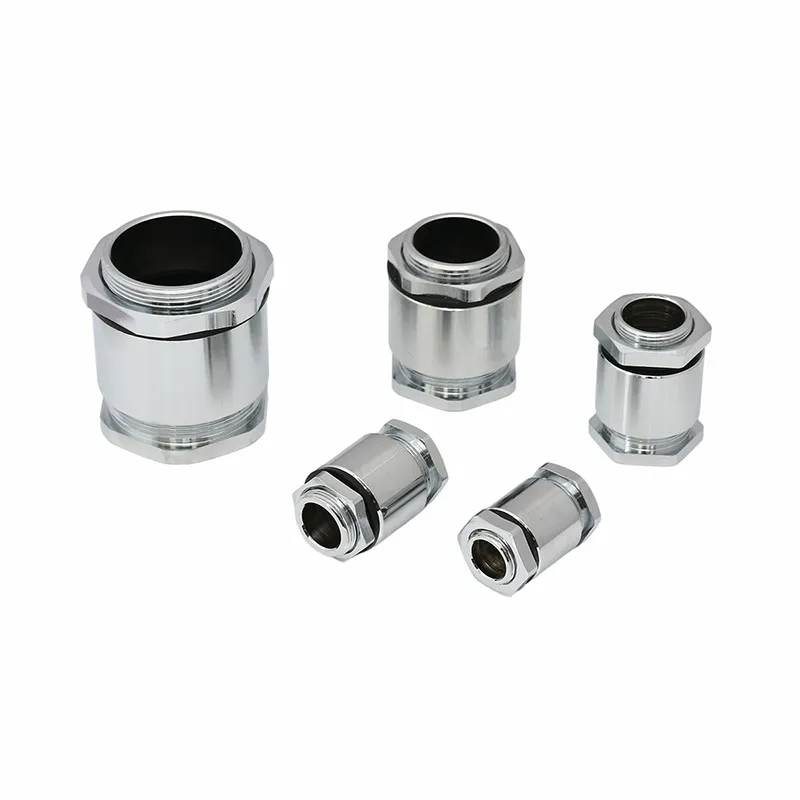
- Marine Environments: In marine settings, there are various sources of noise, such as engine rooms, pumps, and generators. Explosion proof cables used in these areas can help reduce the spread of noise. For example, TJ - Clamping Marine Cable Gland is often used in conjunction with explosion proof cables in marine applications. The gland can also contribute to the overall sound - insulation system by providing a tight seal around the cable, preventing sound leakage.
- Industrial Control Rooms: In industrial control rooms, where operators need a quiet environment to monitor and control equipment, explosion proof cables can play a role in reducing noise from the surrounding industrial areas. The cables can act as a sound - blocking barrier between the noisy machinery and the control room.
Improving the Sound - Insulation Performance of Explosion Proof Cable
As a supplier, we are constantly looking for ways to improve the sound - insulation performance of our explosion proof cables.
- Material Innovation: We are researching and testing new materials that have better sound - absorption and damping properties. For example, we are exploring the use of advanced composite materials that combine the explosion - proof features with enhanced sound - insulation capabilities.
- Design Optimization: The design of the cable can also be optimized for better sound insulation. This could involve adding additional layers of insulation or modifying the thickness and structure of the cable jacket and armor.
Conclusion
In conclusion, the sound - insulation performance of explosion proof cable is a complex but important aspect. While explosion proof cables are mainly designed for safety in hazardous environments, they also have some inherent sound - insulation capabilities due to their construction and materials. The cable jacket, insulation, and armor all contribute to reducing sound transmission. In applications such as marine environments and industrial control rooms, this sound - insulation can be of practical benefit.
If you are interested in our Explosion Proof Cable and would like to learn more about its sound - insulation performance or other features, or if you are considering a purchase for your project, we encourage you to contact us for further discussion. Our team of experts is ready to provide you with detailed information and support to help you make the best decision for your needs.
References
- Beranek, Leo L. "Acoustics." American Institute of Physics, 1954.
- Harris, Cyril M. "Handbook of Noise Control." McGraw - Hill, 1979.
- Craik, R. J. M. "Engineering Materials 1: An Introduction to Properties, Applications and Design." Elsevier, 2012.