

Are Nylon PG Thread Reducers compatible with other plastic components?
Nov 04, 2025
As a supplier of Nylon PG Thread Reducers, I often encounter inquiries from customers regarding the compatibility of these reducers with other plastic components. This blog post aims to delve into this topic, providing a comprehensive analysis based on scientific knowledge and practical experience.
Understanding Nylon PG Thread Reducers
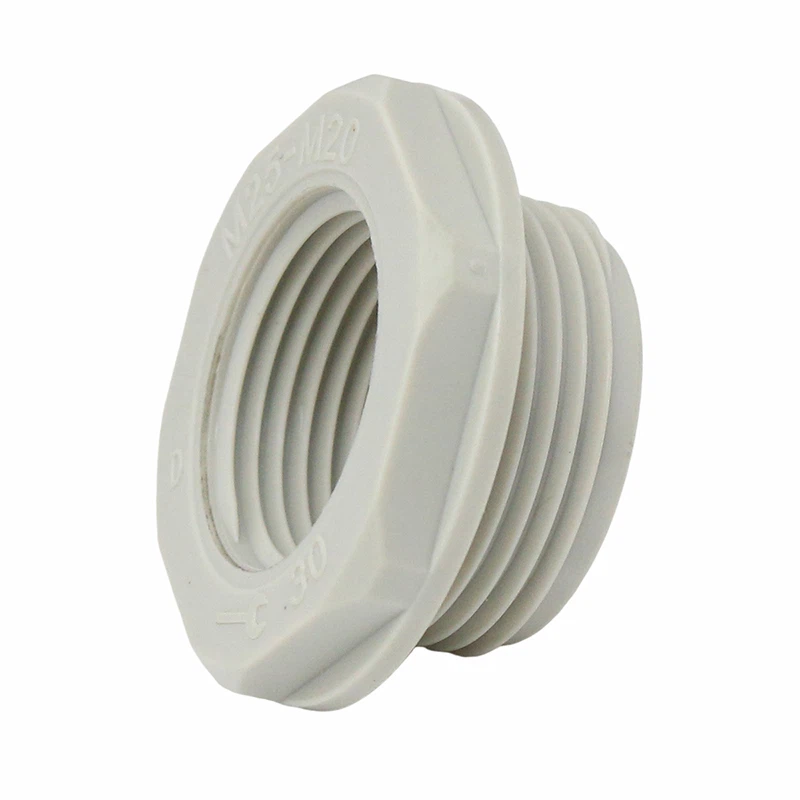
Nylon PG Thread Reducers are essential components in many industrial applications, especially in cable management and electrical installations. They are designed to connect two different sizes of PG threads, allowing for a seamless transition between different cable diameters or equipment interfaces. The use of nylon in these reducers offers several advantages, including corrosion resistance, lightweight, and cost - effectiveness.
Compatibility Factors
Material Compatibility
One of the primary considerations when assessing compatibility is the material of the other plastic components. Nylon is a thermoplastic polymer known for its good chemical resistance and mechanical properties. When it comes into contact with other plastics, the key factor is the chemical nature of those plastics. For example, polypropylene (PP) and polyethylene (PE) are non - polar plastics, while nylon is polar. In most cases, these non - polar plastics have limited chemical interaction with nylon, which means they can be physically combined without significant chemical reactions. However, some polar plastics like polycarbonate (PC) or acrylonitrile butadiene styrene (ABS) may have better chemical compatibility with nylon due to their similar polar nature. This can result in a more stable connection when used in conjunction with Nylon PG Thread Reducers.
Thread Compatibility
Thread compatibility is another crucial aspect. PG threads are a standardized thread type commonly used in Europe for cable glands. When connecting Nylon PG Thread Reducers to other plastic components, the thread size and pitch must match precisely. If the thread sizes are not compatible, it will be impossible to achieve a proper connection. For instance, if a component has a metric thread, a Nylon Metric Thread Reducer may be required to bridge the gap between the PG thread of the reducer and the metric thread of the other component.
Temperature and Environmental Compatibility
The operating temperature and environmental conditions also play a significant role in determining compatibility. Nylon has a certain temperature range within which it maintains its mechanical properties. If the other plastic components have different temperature ratings, it can lead to issues such as expansion or contraction at different rates, which may cause the connection to loosen or fail. Additionally, exposure to chemicals, moisture, and UV radiation can affect the performance of both the Nylon PG Thread Reducers and other plastic components. For example, some plastics may be more resistant to UV radiation than nylon. In outdoor applications, it is essential to ensure that all components can withstand the environmental conditions to maintain compatibility.
Practical Applications and Compatibility Examples
Cable Management Systems
In cable management systems, Nylon PG Thread Reducers are often used to connect different sizes of cable glands or conduits. For example, when connecting a larger - diameter cable gland to a smaller - diameter conduit, a Nylon PG Thread Reducer can be used. In this case, the other plastic components are typically made of polypropylene or PVC. These materials are commonly used in cable management due to their low cost and good electrical insulation properties. As mentioned earlier, the chemical and physical properties of nylon allow it to be compatible with these plastics, ensuring a reliable connection.
Electrical Enclosures
In electrical enclosures, Nylon PG Thread Reducers may be used to connect various electrical components. For instance, they can be used to connect a power supply unit with a specific PG thread interface to a smaller - sized cable outlet. The other plastic components in the enclosure, such as the housing or the cable management trays, may be made of ABS or PC. These polar plastics are often chosen for their high strength and good aesthetic appearance. The compatibility between Nylon PG Thread Reducers and these components is generally good, as long as the thread sizes match and the environmental conditions are within the acceptable range for all materials.

Compatibility Testing
To ensure the compatibility of Nylon PG Thread Reducers with other plastic components, it is advisable to conduct compatibility testing. This can involve physical testing, such as checking the fit and tightness of the connection, as well as chemical testing to assess the potential for chemical reactions between the materials. For example, samples of the Nylon PG Thread Reducer and the other plastic components can be exposed to different environmental conditions, such as high - temperature and high - humidity environments, to observe any changes in their properties over time.
Conclusion
In conclusion, the compatibility of Nylon PG Thread Reducers with other plastic components depends on multiple factors, including material properties, thread sizes, and environmental conditions. In many practical applications, Nylon PG Thread Reducers can be successfully used in conjunction with a variety of plastic components, provided that the necessary compatibility checks are carried out.
If you are interested in purchasing Nylon PG Thread Reducers or have any questions regarding their compatibility with other plastic components, we are here to assist you. Our team of experts can provide detailed technical advice and help you find the most suitable solutions for your specific needs. Feel free to reach out to us for further discussions and procurement negotiations. We also offer a range of related products such as Nylon PG Thread Dome Plug and Nylon Metric Thread Reducer to meet all your cable management requirements.
References
- "Plastics Engineering Handbook" by Donald V. Rosato
- "Cable Management Systems: Design and Installation Guide" by Electrical Installation Association