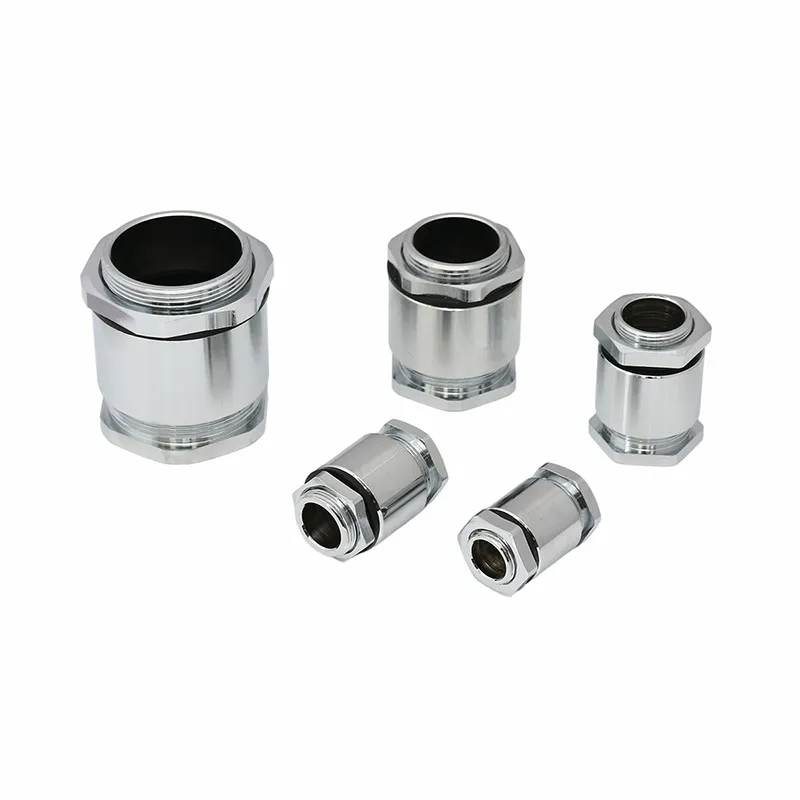
Parts of Cable Stuffing Gland
Outer shell or body
The outer shell of a cable gland is its primary visible component and serves as the foundational structure of the gland assembly. Typically constructed from durable materials such as brass, stainless steel, or aluminum, the outer shell is designed to withstand harsh environmental conditions and provide mechanical protection. Its robustness ensures the integrity of the entire cable gland.
Compression ring
At the core of a cable gland assembly lies the compression ring, often referred to as the gland's heart. This crucial component exerts pressure on the cable, creating a tight seal and anchoring it to the enclosure. When the gland is tightened, the compression ring clamps down on the cable, effectively preventing any movement or strain on the connected conductors.
Sealing insert
The sealing insert plays a pivotal role in the effectiveness of cable glands. This soft, yet durable, element is placed inside the compression ring and forms a tight seal around the cable. It provides an extra layer of protection against the ingress of water, dust, or any hazardous substances that might otherwise compromise the integrity of the installation.
Locknut
The locknut is a crucial gland component responsible for securing the entire assembly to the enclosure or panel. Typically made from metal or plastic, the locknut fastens the cable gland in place, providing stability and ensuring that the gland remains firmly attached to the intended surface.
Earth tag
In applications that require grounding, the earth tag becomes an indispensable part of the cable gland assembly. This metallic component provides a connection point for the grounding conductor, allowing any potentially dangerous currents to be safely directed away from the electrical system.
Entry thread seal
To maintain the environmental integrity of the installation, cable glands are equipped with an entry thread seal. This component ensures that no foreign elements can penetrate through the clearance between the cable and the gland. The thread seal reinforces the tightness of the cable entry point, making it a vital safeguard against any external hazards.
O-ring
The o-ring, a small yet critical part of cable gland construction, enhances the sealing properties of the assembly. Made from various materials such as rubber or silicone, the o-ring is positioned strategically within the gland to bolster its resistance against moisture and dust ingress.
Shroud
In certain installations where the cable is exposed to potential damage, the cable gland might incorporate a shroud for added protection. The shroud acts as an extra shield, safeguarding the cable from mechanical stress, abrasion, or accidental impact.
Breather drain plug
In applications where condensation or pressure differentials May occur, a cable gland May include a breather drain plug. This component allows for the equalization of pressure between the internal and external environments, preventing any potential damage caused by pressure build-up.
Reducer
A reducer is a useful cable gland component when the installation involves cables of different sizes. This component enables the gland to accommodate varying cable diameters, providing flexibility and adaptability to the overall system.