


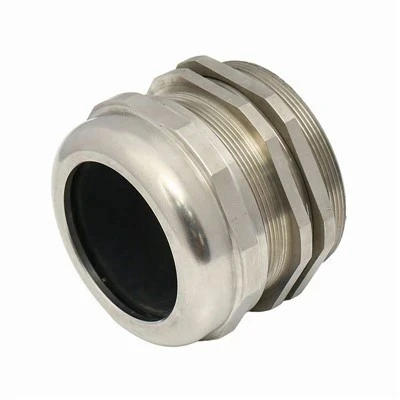
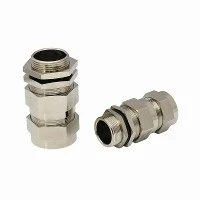
Serrated Gland Locknut
The Serrated Gland Locknut secures cable glands to electrical enclosures while resisting loosening caused by industrial vibration and thermal cycling. Integrated internal teeth bite securely into enclosure walls or thread surfaces, establishing mechanical retention and electrical continuity where grounding contact is required. Manufactured through precision CNC machining and cold forging, these locknuts maintain strict thread tolerance to prevent cross-threading during high-speed panel assembly. Complete 2D/3D CAD models and STEP files are available for direct download to support engineering design and layout validation.
Product Overview
The Serrated Gland Locknut secures cable glands to electrical enclosures while resisting loosening caused by industrial vibration and thermal cycling. Integrated internal teeth bite securely into enclosure walls or thread surfaces, establishing mechanical retention and electrical continuity where grounding contact is required. Manufactured through precision CNC machining and cold forging, these locknuts maintain strict thread tolerance to prevent cross-threading during high-speed panel assembly. Complete 2D/3D CAD models and STEP files are available for direct download to support engineering design and layout validation.
Key Features
Anti-Vibration Serration: Internal teeth grip mating surfaces firmly, preventing vibrational loosening without separate lock washers.
Robust Material Integrity: Available in nickel-plated brass (corrosion resistance), stainless steel 304/316 (chemical/marine environments), and reinforced polyamide (lightweight insulation).
Precise Thread Profile: Clean, burr-free metric, PG, NPT, and G threads ensure smooth engagement with standard cable entries and conduit fittings.
Grounding Capability: Metal variants establish reliable metal-to-metal contact for panel earthing and electromagnetic interference (EMI) continuity.
Technical Specifications
|
Parameter |
Specification Details |
|
Thread Standards |
Metric (ISO), PG (DIN 40430), NPT (ANSI), G (BSPP) |
|
Thread Sizes |
Metric: M12 to M63 / PG: PG7 to PG48 / NPT: 1/4" to 2" |
|
Material Options |
Nickel-Plated Brass, Stainless Steel (AISI 304 / 316), PA6 Nylon |
|
Operating Temperature |
Brass/Stainless Steel: -60°C to +200°C; Nylon: -40°C to +100°C |
|
Ingress Protection (IP) |
Maintains IP66, IP68, and IP69K when paired with standard cable glands |
|
Installation Torque Range |
Varies by thread size and material (e.g., M20 brass: 5.0–7.0 N·m); refer to datasheet for full matrix |
|
Design Resources |
2D/3D CAD models and STEP files available for all standard sizes |
Product Options
Materials & Finishes:
Brass with electroless nickel plating (salt spray tested to 96+ hours).
Unplated stainless steel for acidic or washdown zones.
Thread Configurations: Full range of pitch tolerances designed for standard knockouts and tapped holes.
Tooth Design: Standard single-side serration or dual-side bite configurations based on panel grounding specifications.
Applications
Industrial control panels and automation cabinets.
Heavy machinery and robotics wiring harnesses.
Outdoor distribution boxes and junction terminals.
Renewable energy inverter and control housings.
OEM & ODM Customization
Non-Standard Threads: Custom thread pitches, oversized inner diameters, or specialized thread depths.
Material Certification: Specific alloy grades supplied with mill test certificates (EN 10204 3.1).
Bulk Packaging: Industrial bulk bags or blister packaging tailored to automated assembly lines.
Quality Control & Manufacturing
In-House Production: Produced via multi-axis CNC lathes and automatic cold-forming presses, backed by dedicated safety stock buffering to ensure consistent supply chain continuity for high-volume orders.
Dimensional Inspection: Optical comparator and GO/NO-GO thread plug gauges used on every production lot.
Plating Thickness Test: X-ray fluorescence (XRF) coating thickness measurement verifying nickel layer uniformity.
Documentation: RoHS, REACH, and material traceability reports available upon request.
Frequently Asked Questions
Q: How do serrated locknuts prevent loosening under heavy vibration?
A: The built-in teeth act as mechanical wedges that bite into the enclosure wall when torqued down, increasing frictional resistance against rotational back-off.
Q: Can these locknuts be used for grounding/earthing?
A: Yes. Nickel-plated brass and stainless steel variants penetrate paint or oxide layers on unpainted enclosures to establish conductive ground paths.
Q: What is the recommended installation torque?
A: Torque values depend on thread size and material (e.g., standard M20 brass typically ranges from 5.0 to 7.0 N·m). Always refer to our technical data sheet or consult engineering support to prevent thread stripping.
Q: Are 3D CAD files available for project design?
A: Yes. STEP and IGES files for all standard thread sizes can be requested directly from our engineering team or downloaded via our portal.
Q: What documents are provided with shipment?
A: Standard shipments include a Certificate of Compliance (CoC), packing list, and material test reports upon request.
Q: How do you handle supply chain stability for ongoing production?
A: We maintain dedicated buffer stock for standard metric and PG brass locknuts to ensure predictable lead times (7 to 10 days) and prevent line-down situations.
Request a Quote
To receive a prompt technical proposal, inventory status, and pricing, please specify:
Thread Type & Size: e.g., Metric M20 x 1.5, PG13.5
Material Preference: Nickel-Plated Brass, Stainless Steel 304/316, Nylon
Quantity Required: Annual volume or per-batch requirement
Target Application or Special Requirements: e.g., specific salt spray hours, grounding needs, CAD file request
Hot Tags: serrated gland locknut, China serrated gland locknut suppliers, factory


Send Inquiry
