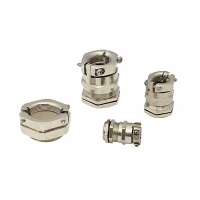
Uses of Metal Packing Gland
Dec 17, 2024
The packing gland is a commonly used packing compactor, which can be made into a grid shape and placed freely on the top of the packing. It compacts the packing by its own gravity. It is also called packing plate, packing ring, packing grid, packing compactor, etc. The metal packing gland is a packing gland made of metal material. It is suitable for random packing made of ceramic and graphite. It can prevent the packing layer from loosening and breaking at high gas velocity (high pressure drop) and sudden load fluctuations. If the bulk packing is loose or bridged, it will aggravate the unevenness of gas-liquid flow, thereby reducing the separation efficiency of the tower; if the packing is damaged, the debris will accumulate in the gaps of the bed packing, causing the porosity of the packing layer to decrease, affecting the flux of the tower. For random packing, sometimes due to uneven filling, the packing layer will sink during the operation process, while the metal packing gland placed freely on the packing layer can sink with the packing, tightly press the packing to prevent it from loosening, so the bulk packing compressor must have a certain weight. Generally, when the pressure difference is large and the tower diameter is large, the weight should also increase accordingly.
Purpose of metal packing gland:
1. Maintain the stability of the packing layer
Prevent the packing from loosening
In the operation of packed towers in chemical, petroleum and other industrial fields, high gas velocity (high pressure drop) is often encountered. For example, in the fractionation tower of a refinery, when the gas flow rate is high, a large impact force will be generated on the packing layer. The metal packing gland is placed on the upper end of the packing by its own weight, which can resist this impact force and prevent the packing layer from loosening. Once the packing layer is loose, the flow path of gas and liquid in the packing layer will be disrupted, and the originally evenly distributed gas-liquid contact interface will be destroyed, thereby reducing the mass transfer efficiency.
In the case of sudden load fluctuations, such as sudden changes in feed rate or temperature during chemical production, the packing layer may also be unstable. The metal packing gland can play a buffering and stabilizing role, ensuring the integrity of the packing layer structure, so that the gas and liquid can continuously and stably transfer mass and heat in the packing layer.
Avoid packing damage
For relatively brittle random packing such as ceramics and graphite, it is easy to be damaged by wear, impact or mutual extrusion between packing during long-term operation. The metal packing gland can reduce the relative movement of the packing and reduce the risk of packing damage by compacting the packing layer. If the packing is damaged and produces debris, these debris will fill the gaps in the packing layer, reducing the space for gas and liquid flow, reducing the porosity of the packing layer, and affecting the flux of the tower. The metal packing gland helps to avoid this situation.
Prevent packing from sinking and moving
During the random packing filling process, it is difficult to ensure completely uniform filling. As the operation proceeds, the packing layer may sink. The metal packing gland is freely placed on the packing layer and can sink with the packing, always maintaining the compaction of the packing and preventing unnecessary movement of the packing in the tower. For example, in a large chemical packing tower, if the packing moves, it may cause local packing accumulation, affecting the uniform distribution of gas and liquid, and thus affecting the operating performance of the entire tower.
2. Assisting uniform distribution of gas and liquid
Maintaining the gap structure
The metal packing gland keeps the packing layer as a constant fixed bed, which helps to maintain a uniform gap structure. In a packed tower, gas and liquid are in contact and mass transfer through the gaps of the packing. Without the compaction of the packing gland, the packing layer may have local gaps that are too large or too small. For example, in some adsorption separation towers, the uneven gap structure of the packing will lead to uneven contact between the adsorbent and the adsorbed substance, reducing the adsorption effect. The metal packing gland can ensure the stability of the gap structure of the packing layer, make the flow of gas and liquid in the packing layer more uniform, and improve the mass transfer efficiency.
Improve mass transfer efficiency
Because the metal packing gland can prevent the packing layer from loosening, breaking, sinking and moving, and maintain a uniform gap structure, this creates good conditions for full contact between gas and liquid in the packing layer. The more complete the gas-liquid contact, the more efficient the mass transfer process. Many reactions and separation processes in chemical production, such as distillation, absorption, extraction, etc., rely on efficient mass transfer of gas and liquid in the packed tower. For example, in the absorption tower during the natural gas purification process, the presence of the metal packing gland helps to improve the absorption efficiency of the absorbent for acidic gases, thereby improving the quality of natural gas.
Prevent gas-liquid channeling and wall flow
In a packed tower, if there is no packing gland, the unevenness of the packing layer may cause channeling and wall flow of gas and liquid. Channeling refers to the formation of local fast channels by gas or liquid in the packing layer, while wall flow refers to the tendency of gas and liquid to flow along the tower wall. These phenomena will reduce the effective contact area between gas and liquid in the packing layer and affect the mass transfer effect. The metal packing gland can reduce the occurrence of channeling and wall flow by compacting the packing layer, making the gas and liquid more evenly distributed in the packing layer and improving the operating performance of the entire packed tower.