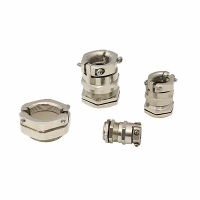
Common materials for metal packing glands
Dec 17, 2024
1. Carbon steel
Carbon steel is an iron alloy containing carbon elements. It has high strength and hardness, and its cost is relatively low. It is one of the more commonly used materials for manufacturing metal packing glands. In some chemical environments where corrosion resistance is not particularly high, such as some packing towers that handle neutral media (such as water, certain organic solvents, etc.), carbon steel packing glands can meet basic use requirements. For example, in some ordinary petroleum product separation towers, if the medium is less corrosive to the metal, the carbon steel packing gland can play the role of compressing the packing with its good mechanical properties. However, carbon steel has limited corrosion resistance and is prone to rust in a humid environment or in an environment containing corrosive substances (such as acids and alkalis). Appropriate anti-corrosion treatment is required, such as painting, galvanizing, etc.
2.304 stainless steel
304 stainless steel is a widely used stainless steel material. It contains 18% chromium and 8% nickel, has good corrosion resistance, and can remain stable in a variety of chemical environments. It is often used in packing towers in the food, chemical, pharmaceutical and other industries. For example, in the spice extraction tower in the food processing industry, since it may come into contact with substances containing acidic or alkaline components, the 304 stainless steel packing gland will not be corroded, thus ensuring the normal operation of the equipment and the quality of the product. 304 stainless steel also has good processing performance, and can be easily made into packing glands of various shapes and specifications, and its appearance is more beautiful, easy to clean and maintain.
3.304L stainless steel
304L stainless steel is a low-carbon version of 304 stainless steel, with a lower carbon content, better welding performance and resistance to intergranular corrosion. In some packing glands that require welding processing and manufacturing, if 304 stainless steel is used, there may be a risk of intergranular corrosion at the welding part, while 304L stainless steel can effectively avoid this situation. For example, in the construction of packing towers in large chemical plants, when the packing gland needs to be welded and assembled on site, 304L stainless steel is a better choice. It can ensure the quality and reliability of the welding part while ensuring corrosion resistance.
4.316 stainless steel
316 stainless steel contains 2% - 3% molybdenum, which is better than 304 stainless steel in corrosion resistance, especially in highly corrosive environments such as chlorides. It is widely used in packing towers in the fields of marine chemical industry and seawater desalination. For example, in the packing tower of the seawater desalination device, since the seawater contains a large amount of chlorides, the 316 stainless steel packing gland can resist the corrosion of seawater and work stably for a long time. The strength and toughness of 316 stainless steel are also relatively good, and it can withstand a certain amount of pressure and impact force to ensure the clamping function in the packing tower.
5.316L stainless steel
316L stainless steel is a low-carbon version of 316 stainless steel. Compared with 316 stainless steel, it has better resistance to intergranular corrosion. In some chemical production processes with extremely high requirements for corrosion resistance, such as in the production of high-purity chemicals or in packing towers in highly corrosive media environments, 316L stainless steel packing glands are ideal choices. For example, in a packed tower producing electronic-grade chemicals, any slight corrosion may affect the purity of the product. 316L stainless steel can meet such stringent requirements and ensure the stability of the packing layer and product quality.